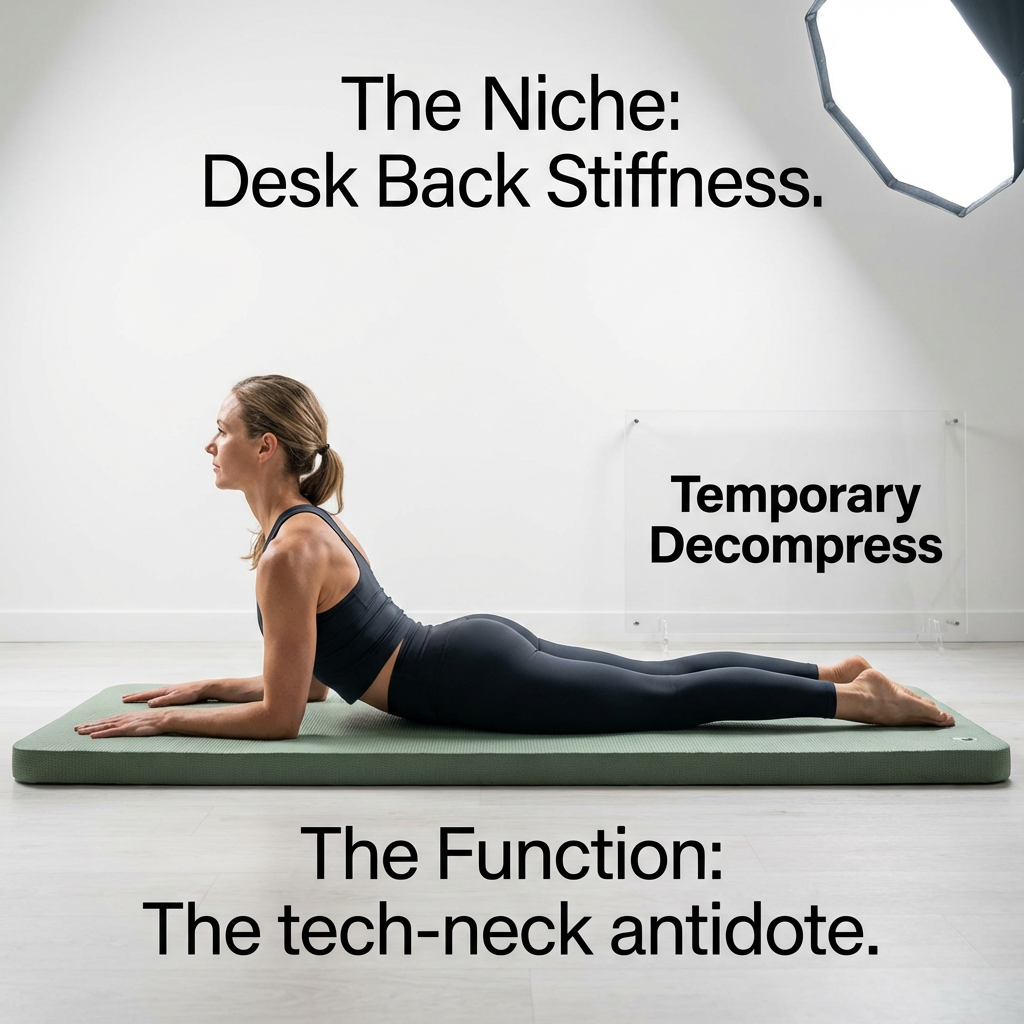
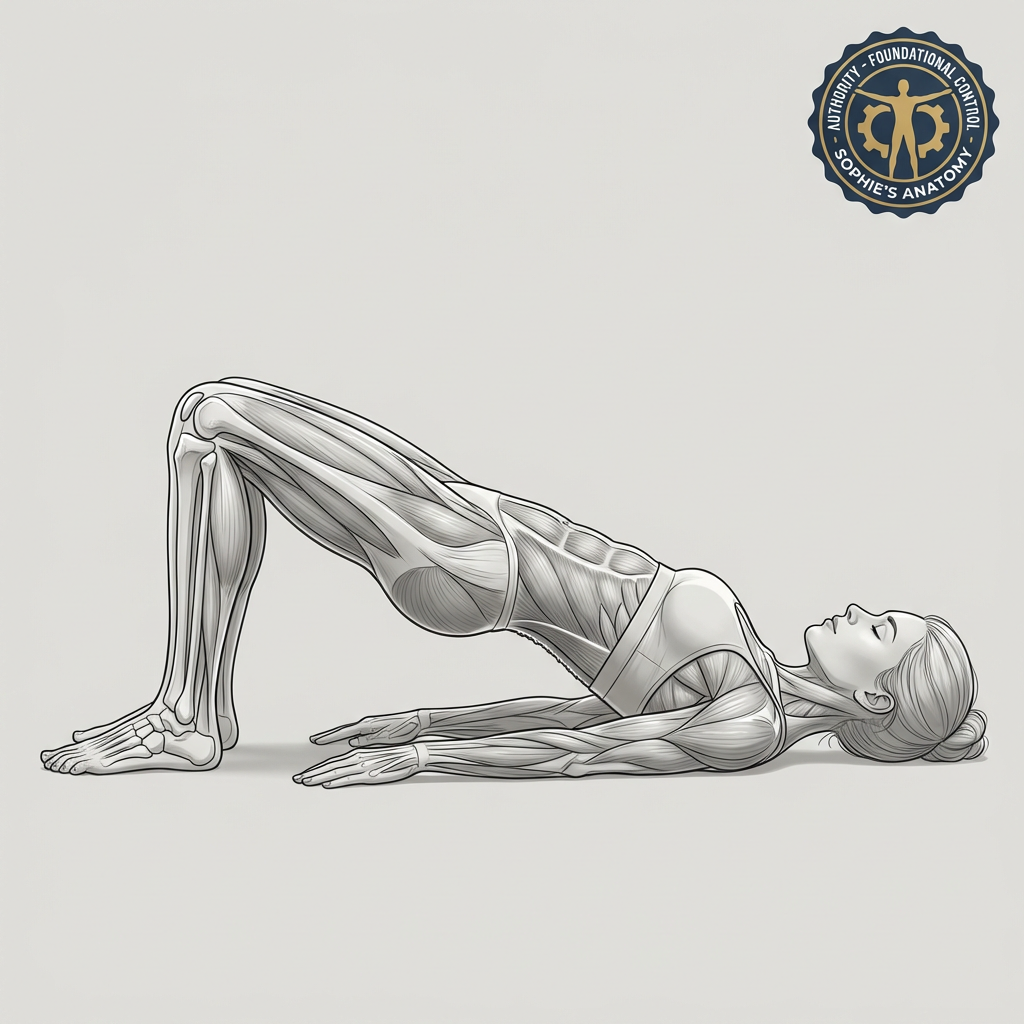
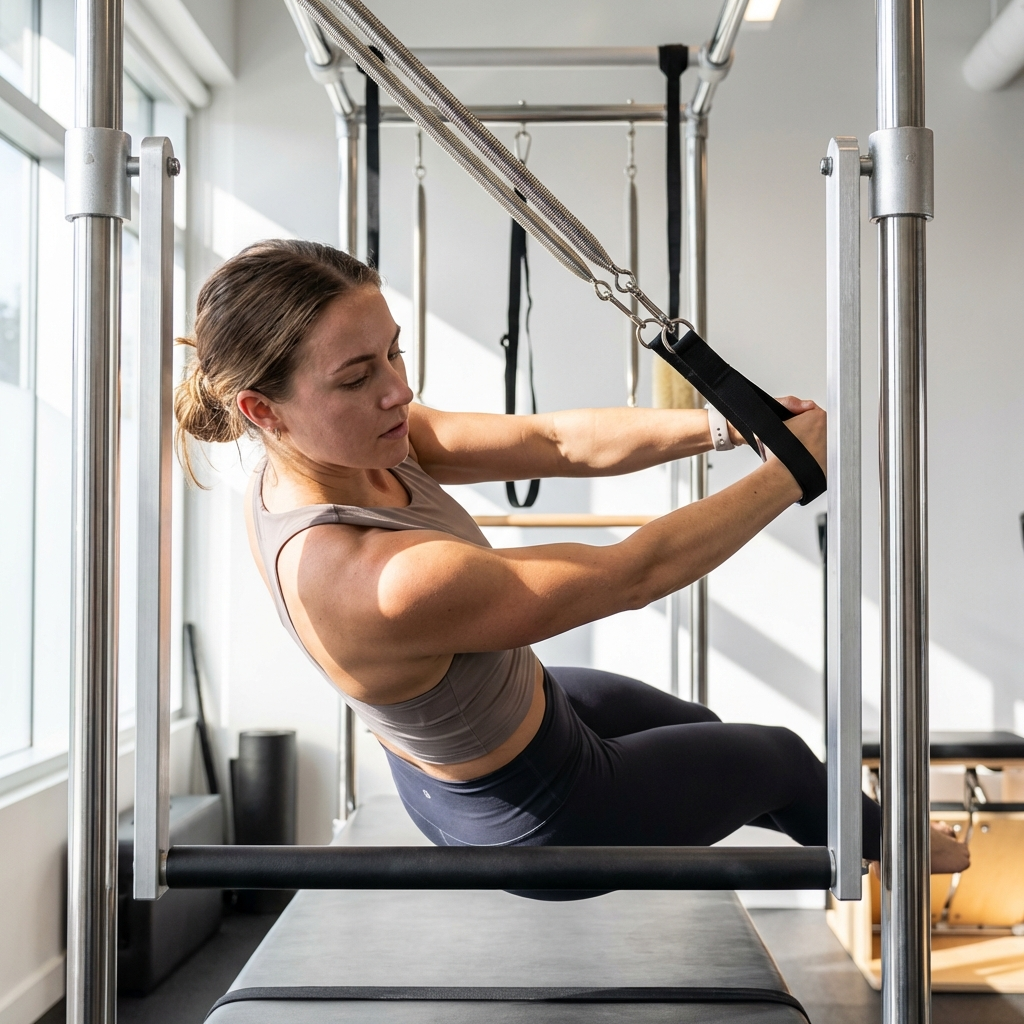
Thoracic Decompress on Spine Suppressor
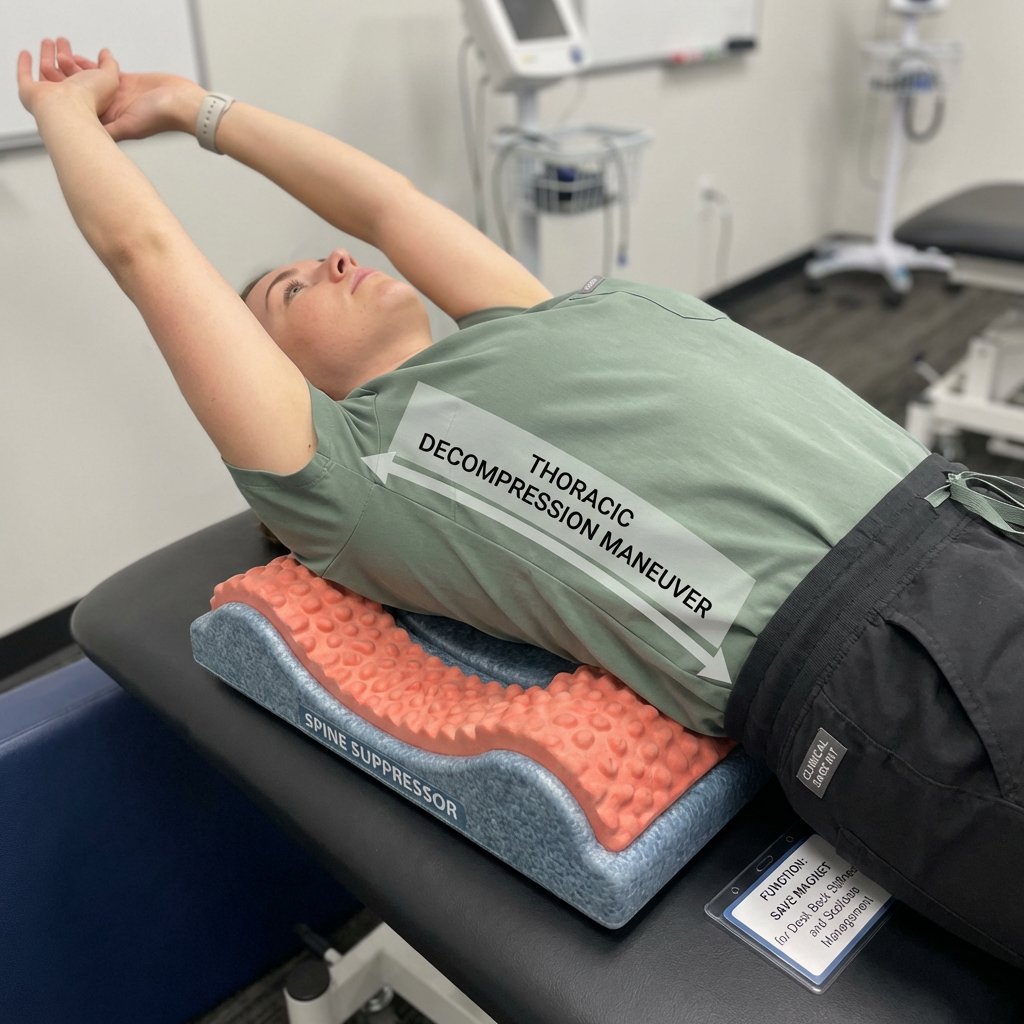
Posture isn't a flexibility problem — it's a motor-control and strength problem. Stretching the tight pectorals doesn't help if the thoracic extensors and scapular stabilisers aren't strong enough to hold the new position. Sophie's protocol rebuilds the holding muscles, not just the released ones.
I'd been told for years my posture was 'tight pecs'. Spending two months stretching them changed nothing. Building strength in the upper back is what finally held me upright.
Clinical Evidence: Pilates reduces lower back pain by up to 72% (Asik et al, 2025 RCT). NICE recommends Pilates as a first-line treatment for chronic lower back pain before medication.
Many people with posture have related compensation patterns elsewhere in the spine. These comparisons walk through how Sophie's clinical Pilates protocols differ from generic stretching for each condition.
Browse the full library of evidence-based Pilates protocols for 35 conditions across back pain, sport-specific training, and post-surgical recovery.
Posture is not a position — it is a habit. The forward-rounded shoulders, the chin poke, the anterior pelvic tilt: each one is a pattern your nervous system has been rehearsing for years, and your muscles have adapted to. "Standing up straight" feels like effort because the muscles required to hold a neutral posture have weakened, while the muscles that hold you in the rounded posture have shortened. Stretching tight muscles is half the picture — the other half, almost always missed, is strengthening the muscles that are supposed to be doing the holding.
The classic posture-correction stretches — doorway pec stretches, chest openers, upper-back foam rolling — release the tight anterior chain. That is genuinely useful for the first few weeks. But it has a ceiling. Once the front-line muscles are at normal length, further stretching gives no return. Meanwhile, the back-line muscles that should be holding the new posture together — middle and lower trapezius, rhomboids, deep neck flexors, thoracic extensors — have been switched off for years. They have to be deliberately re-trained.
There is also a load problem. Stretching reduces tension; it does not build endurance. Posture is held continuously throughout the day — eight, ten, twelve hours of sustained low-grade muscular work. Stretching trains nothing about endurance. The classic pattern is feeling great after a stretch session, then collapsing back into the old posture within an hour because the back-line muscles fatigue almost immediately.
The third issue is integration. Good standing posture requires the feet, ankles, hips, lumbar spine, thoracic spine, shoulder blades, and neck to all coordinate. Stretching isolated muscles cannot teach this coordination. Without an integrated movement practice, isolated flexibility gains rarely translate into changed daily posture.
A clinical Pilates protocol for posture works the system end-to-end. The tight front-line is opened — but as part of a sequence that also reactivates the under-firing back-line. Thoracic mobility is restored. Scapular control is rebuilt. Deep neck flexors are awakened (these are often atrophied to the point of being almost non-functional in chronic forward-head posture). Hip extension is restored so the pelvis sits neutrally. Each piece of the puzzle is addressed at the right time, in the right order.
The protocol also builds postural endurance. This is the part most posture programmes miss. Holding good posture for ten seconds is easy. Holding it for ten hours is a muscular endurance challenge. The protocol's progressive loading — starting from supported positions, moving to unsupported, then to single-limb, then to functional movement — builds the muscular capacity for the back-line to actually do its job all day, not just during the session.
By weeks 5–6, most clients notice they no longer have to consciously remind themselves to stand up straight. The posture has become automatic — which is the only outcome that matters. The nervous system has accepted the new pattern as default, and the muscles have the strength and endurance to maintain it without conscious effort.
Sessions are 20 minutes, three to four times per week. Plus a 90-second integration drill done two to three times during the workday.
6-week progressive programme · 26 clinical exercises · Weekly schedules · Recovery tracker
“I'd been told for years my posture was 'tight pecs'. Spending two months stretching them changed nothing. Building strength in the upper back is wh...” — Emma W., Brighton, UK · Visible posture change (After 6 weeks)
7-day money-back guarantee · Instant PDF download