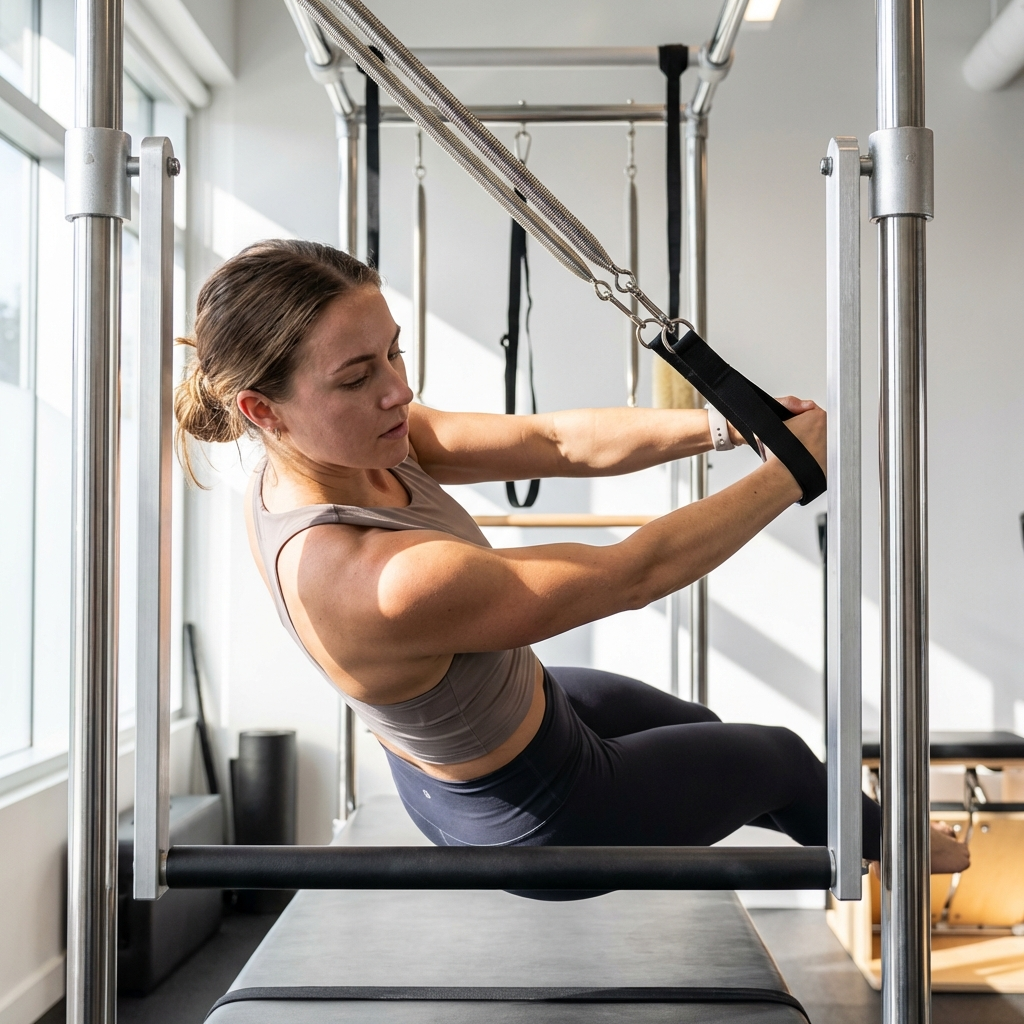
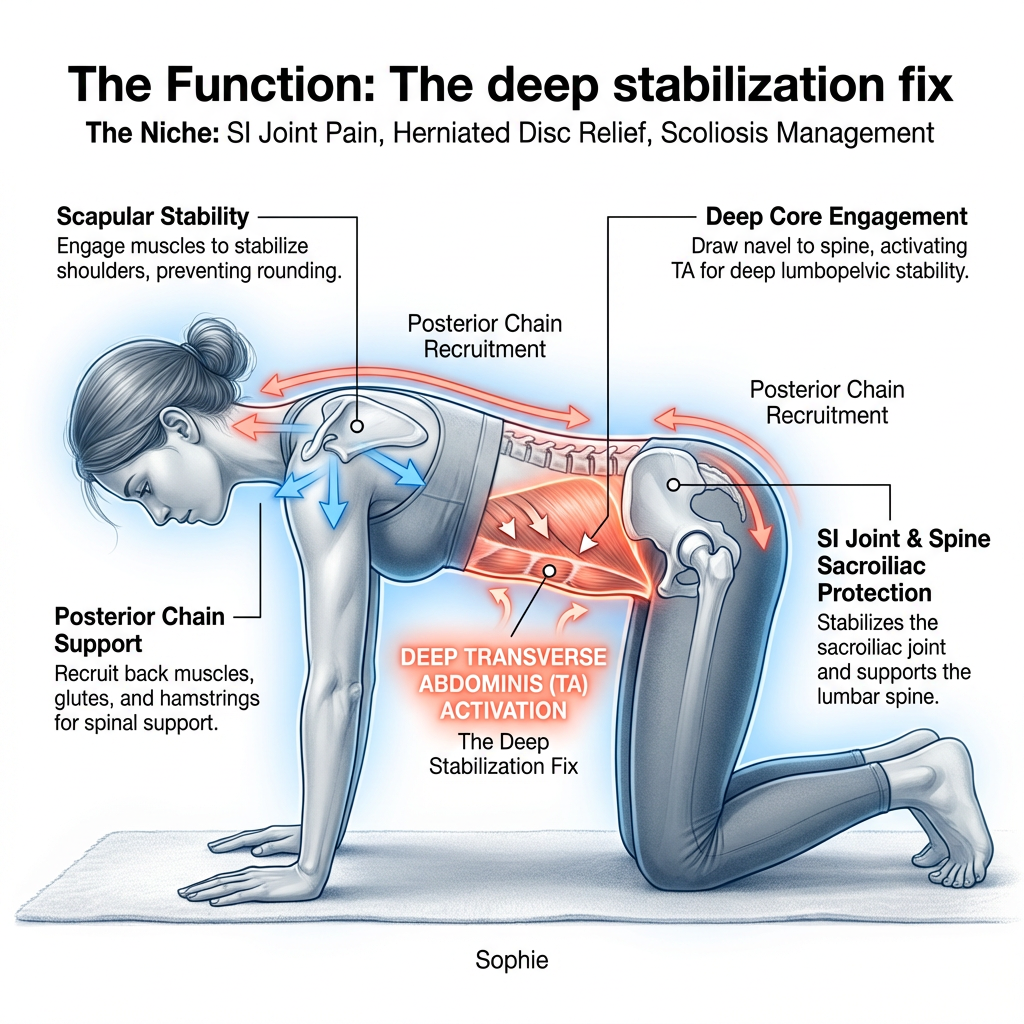
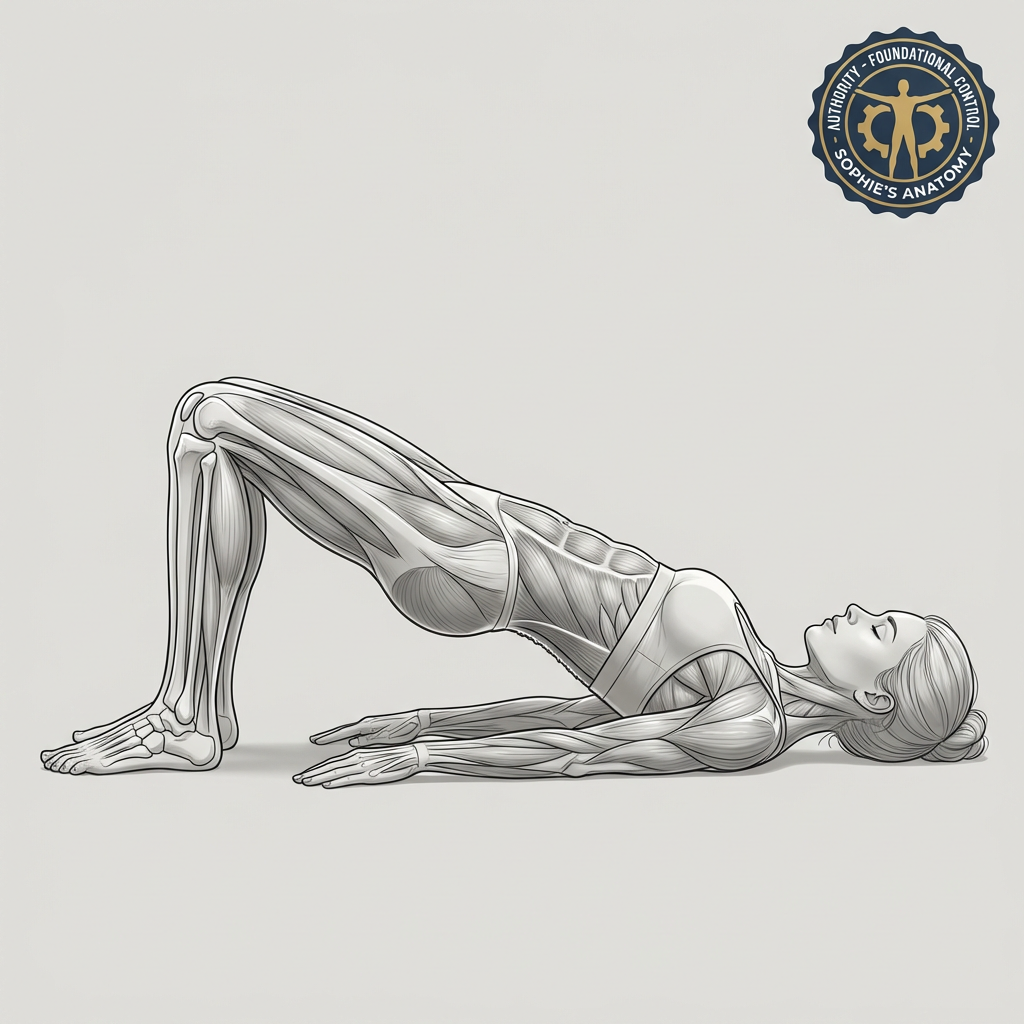
Thoracic Decompress on Spine Suppressor
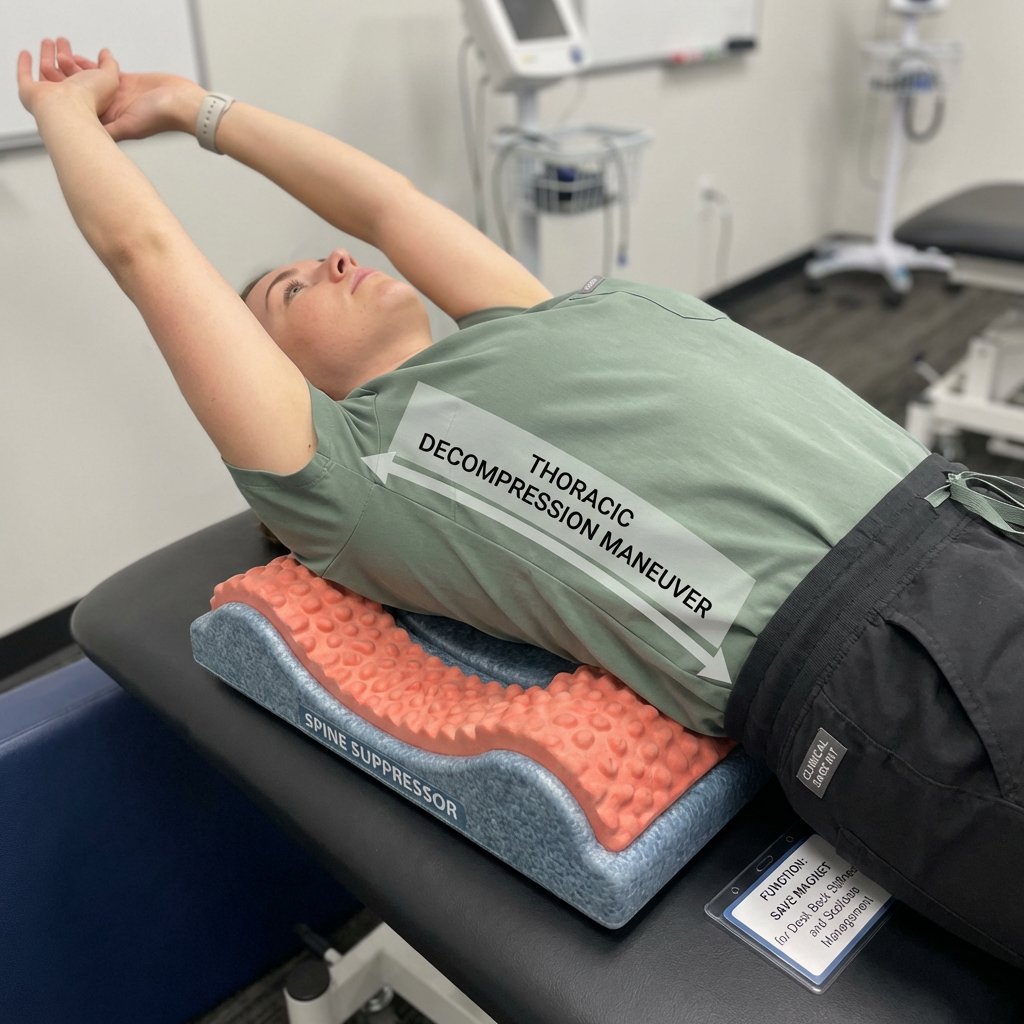
Generic stretching treats both sides the same. Scoliosis isn't symmetric — and treating it that way often reinforces the rotational pattern. Sophie's protocol uses asymmetric decompression and rotational stabilisation aligned with SOSORT physiotherapeutic scoliosis-specific exercise principles.
Every Pilates class I'd taken treated me like I had a straight spine. This was the first programme that actually addressed the curve. Less fatigue, fewer rib flares.
Clinical Evidence: Pilates reduces lower back pain by up to 72% (Asik et al, 2025 RCT). NICE recommends Pilates as a first-line treatment for chronic lower back pain before medication.
Many people with scoliosis have related compensation patterns elsewhere in the spine. These comparisons walk through how Sophie's clinical Pilates protocols differ from generic stretching for each condition.
Browse the full library of evidence-based Pilates protocols for 35 conditions across back pain, sport-specific training, and post-surgical recovery.
Scoliosis is a three-dimensional curvature of the spine — it bends sideways and rotates simultaneously. For adults with non-progressive scoliosis (Cobb angles typically under 40 degrees), exercise is the central management strategy. The aim is not to "fix" the curve — adult scoliotic curves do not reverse — but to manage pain, prevent progression, and maintain function. Generic stretching can paradoxically worsen scoliosis pain because it treats the spine as a symmetrical structure that needs balanced opening. A scoliotic spine needs the opposite: targeted, asymmetric work that addresses each side of the curve specifically.
In a scoliotic spine, one side of each curve is concave (shortened muscles, compressed disc space) and the other side is convex (lengthened muscles, expanded disc space). Symmetrical stretching — child's pose, forward folds, lateral flexion to both sides equally — applies equal force to both sides. The result is that the convex (already-stretched) side stretches further, while the concave (already-tight) side resists. Over time, this can deepen the asymmetry rather than reduce it.
The rotational dimension makes this worse. A scoliotic spine isn't just bent — it's twisted. Generic spinal twists treat both rotational directions the same, even though one direction takes the spine further into its existing rotational pattern (deepening the curve's torsional component) and the other unwinds it. Without knowing which is which, well-intentioned twisting often makes pain worse.
Finally, scoliotic spines have characteristic patterns of muscle overactivity (the concave-side erectors hold the curve in place around the clock) and underactivity (the convex-side stabilisers have been stretched out and don't fire well). Stretching ignores this pattern entirely. Without strengthening the underactive side and learning to release the overactive side under control, the curve's muscular pattern remains.
A scoliosis-specific Pilates protocol works the spine as the three-dimensional structure it actually is. The work is asymmetric by design. On the concave side of each curve, the protocol uses gentle decompression — supported lengthening positions, breath-driven rib expansion — to open the compressed segment. On the convex side, the protocol uses targeted strengthening — side-lying work, asymmetric loading, single-arm or single-leg variations — to wake up the under-firing stabilisers.
The rotational component is addressed through Pilates' classic rotational exercises, performed with awareness of which direction unwinds the curve and which deepens it. The protocol provides clear cueing on this so you know, on each rotation, what your spine should be doing. Combined with deep core work that provides the muscular framework the curve needs to be supported within, the result is a spine that hurts less, moves better, and shows much slower progression on follow-up imaging.
For most adult scoliosis presentations, the goal is functional: less pain, more mobility, better breathing capacity, no further loss of height or curve increase. The protocol is built around these realistic, achievable outcomes — not a promise of curve reversal that no exercise programme can deliver.
Sessions are 30 minutes, three to four times per week. The structure mirrors the Schroth method principles familiar to scoliosis physiotherapists, applied through Pilates movement vocabulary.
10-week progressive programme · 36 clinical exercises · Weekly schedules · Recovery tracker
“Every Pilates class I'd taken treated me like I had a straight spine. This was the first programme that actually addressed the curve. Less fatigue,...” — Priya S., London, UK · Significantly reduced rib pain (After 8 weeks)
7-day money-back guarantee · Instant PDF download