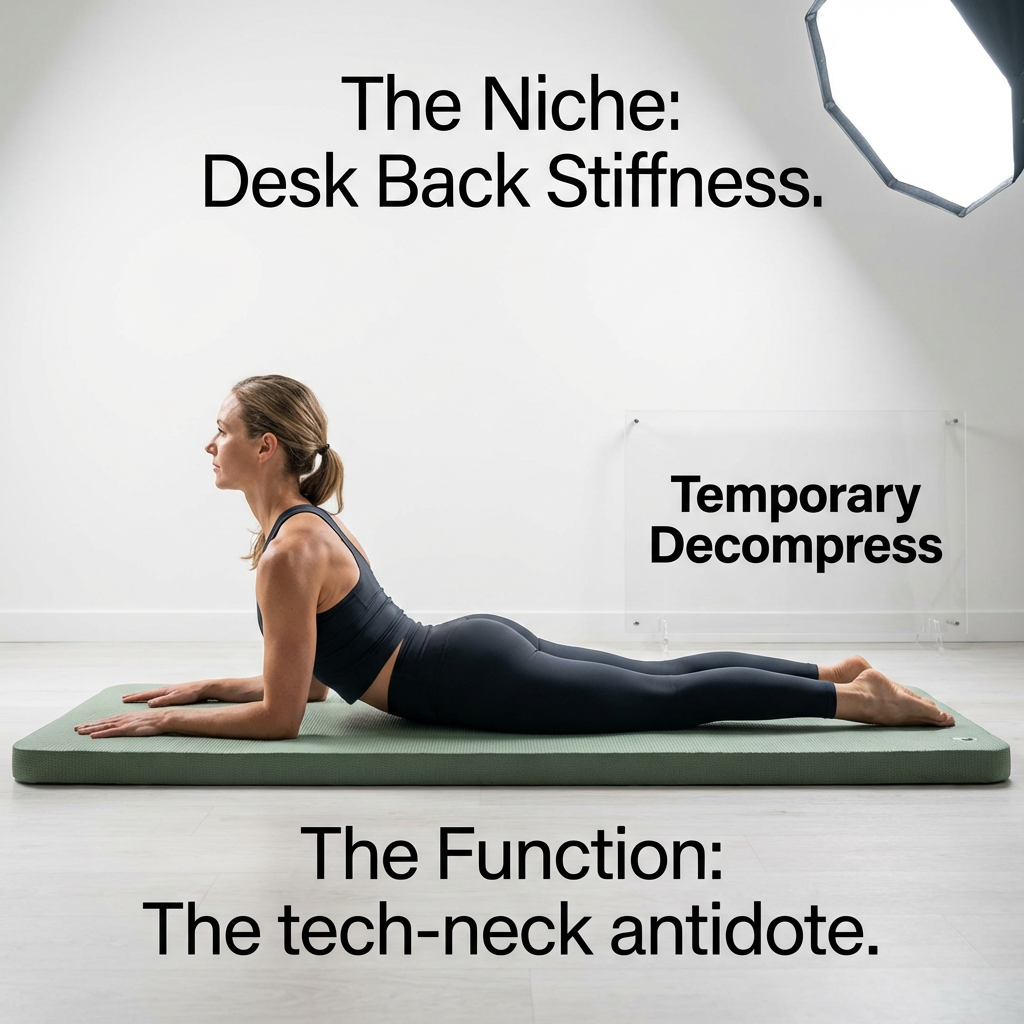
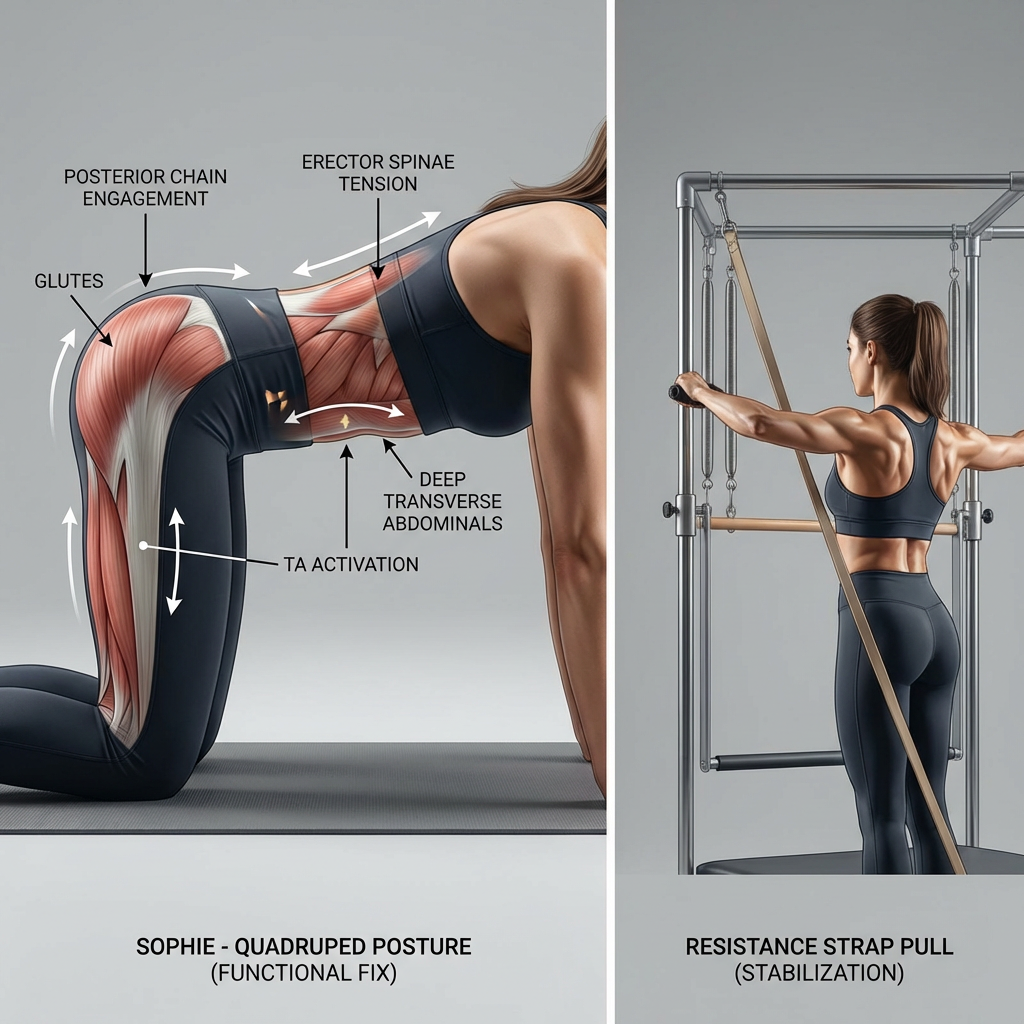
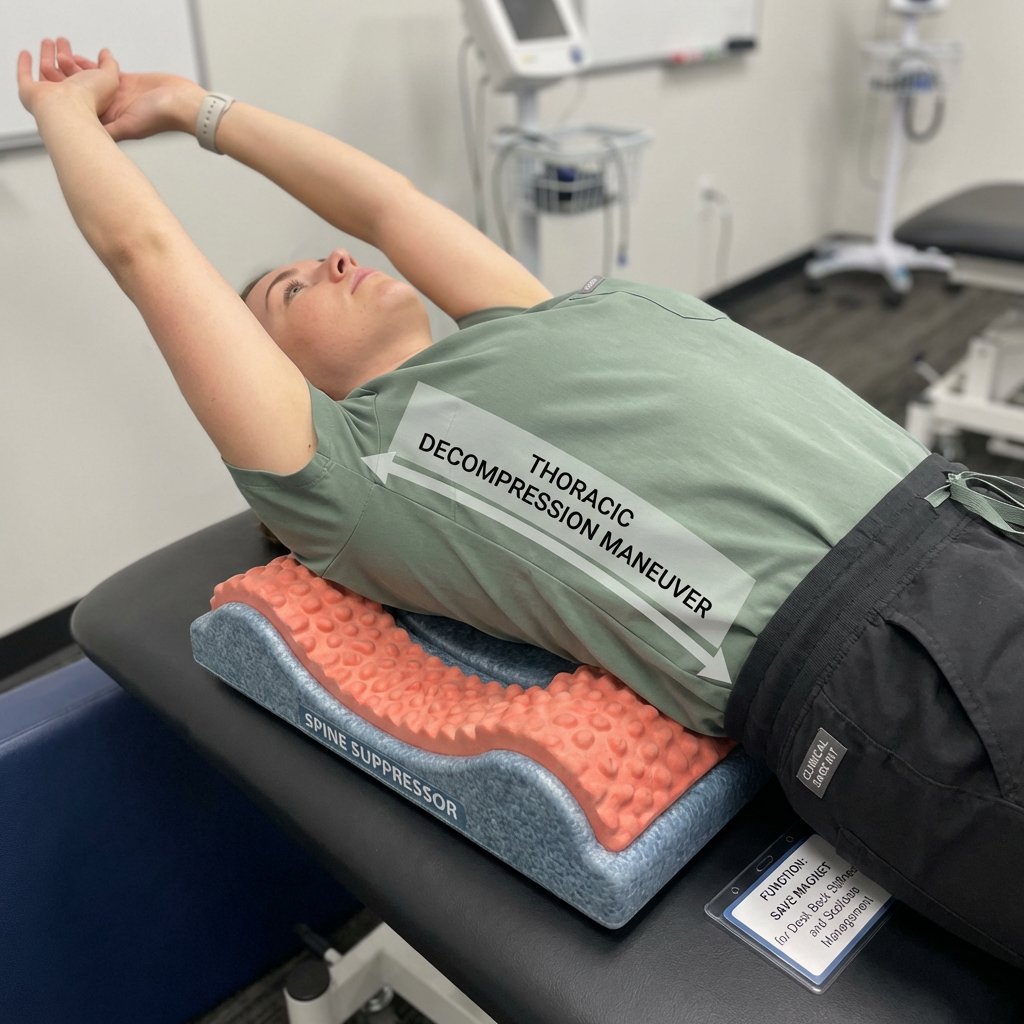
Thoracic Decompress on Spine Suppressor
The most common cause of chronic neck pain isn't a tight neck — it's a stiff thoracic spine and weak scapular stabilisers. Stretching the neck buys hours of relief at best. Mobilising the thoracic spine and rebuilding the scapular base is the durable change.
Years of neck stretches and foam rolling. None of it stuck. Sophie's protocol actually addresses where the stiffness lives — the thoracic spine — and the neck just stopped hurting.
Clinical Evidence: Pilates reduces lower back pain by up to 72% (Asik et al, 2025 RCT). NICE recommends Pilates as a first-line treatment for chronic lower back pain before medication.
Many people with neck and upper back have related compensation patterns elsewhere in the spine. These comparisons walk through how Sophie's clinical Pilates protocols differ from generic stretching for each condition.
Browse the full library of evidence-based Pilates protocols for 35 conditions across back pain, sport-specific training, and post-surgical recovery.
Neck and upper back pain almost always travels together. The two regions share muscles, share posture, and share a common cause: prolonged forward-head, rounded-shoulder positioning combined with chronic low-grade tension in the upper trapezius and suboccipital muscles. Stretching the painful upper trapezius — the instinctive first response — provides minutes of relief and then the tension returns, often within the same workday. The reason is that the upper trapezius is over-firing because the deep neck flexors below it and the lower trapezius below them are under-firing. Until those are addressed, the upper trapezius will keep doing two muscles' jobs.
The upper trapezius is one of the most stretched muscles in modern life, and one of the most futilely stretched. Side-neck stretches, levator scapulae stretches, suboccipital release — each provides genuine but brief relief. The reason the tension comes back so quickly is that the upper trapezius is doing emergency work. It's holding the head up against gravity because the deep neck flexors that should be doing that job are atrophied. It's holding the shoulder blades elevated because the lower trapezius and serratus anterior that should be doing that job are switched off. Releasing the upper trapezius without rebuilding what it's substituting for guarantees the tension returns.
The forward-head position adds a second mechanical problem. For every inch the head moves forward of neutral, the load on the cervical extensor muscles doubles. A head positioned 3 inches forward — typical for desk workers — places six times the normal load on the back of the neck. Stretching does not change the head position; it only briefly reduces the muscular response to it. As soon as the head returns to forward, the load returns.
Finally, the thoracic spine is the missing piece. A stiff, kyphotic upper back forces the neck to over-extend just to keep the eyes level. Without restoring thoracic mobility, the neck has no choice but to compensate. Stretching the neck while ignoring the thoracic spine is like adjusting a building's top floor without checking the foundation.
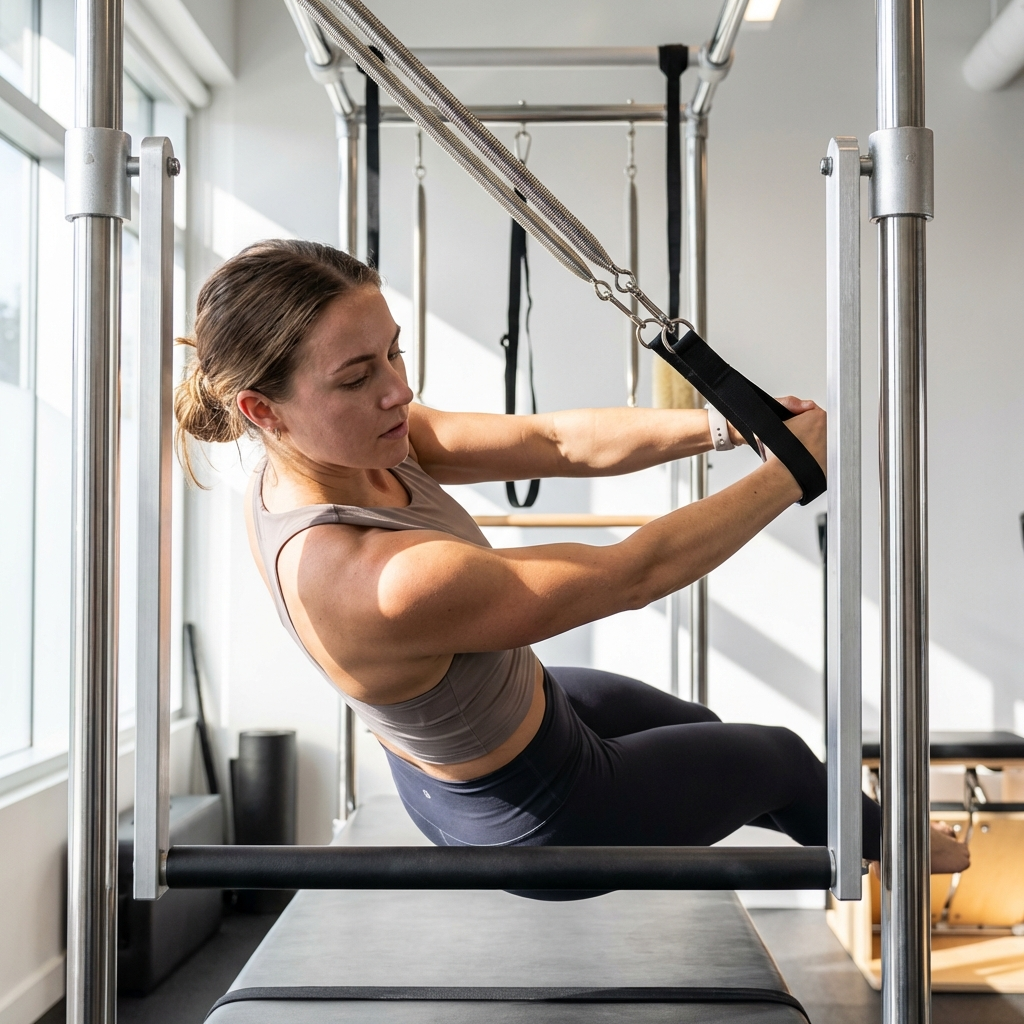
A clinical Pilates protocol for neck and upper back pain addresses all three contributors at once: it activates the deep neck flexors so they take over from the overworked upper trapezius, restores thoracic mobility so the neck doesn't have to compensate for stiffness below it, and rebuilds the scapular control system (lower trapezius, serratus anterior, rhomboids) so the shoulder blades sit and move where they should.
The deep neck flexor work is the most distinctive piece. These small, deep muscles at the front of the neck are almost invisible in mainstream fitness — yet they are the single most important factor in long-term cervical health. The protocol teaches you to activate them through chin-nod cueing in supine, progressing to upright positions over the eight weeks. By week 4, most clients can feel their deep neck flexors engaging automatically when they sit at their desk — which is the moment the upper trapezius can finally relax.
Around this, the protocol uses Pilates' rich thoracic mobility vocabulary (open-book rotations, supported thoracic extension over a roller, cat-cow variations) to restore the mid-back range that desk life erodes. Scapular control work — Y-T-W reaches, wall slides, prone variations — rebuilds the shoulder blade positioning that supports a neutral neck position. By eight weeks, most chronic neck-pain clients report substantial reduction in daily pain and tension headaches.
Sessions are 20 minutes, three to four times per week, plus a 90-second desk reset done two to three times during the workday.
6-week progressive programme · 28 clinical exercises · Weekly schedules · Recovery tracker
“Years of neck stretches and foam rolling. None of it stuck. Sophie's protocol actually addresses where the stiffness lives — the thoracic spine — a...” — Joshua P., Cardiff, UK · Persistent relief at 3 months (After 4 weeks)
7-day money-back guarantee · Instant PDF download