Sophie's clinical protocol for Pilates vs Stretching for Herniated Disc Recovery — evidence-based, NICE-aligned   See the Herniated Disc Recovery Pilates program →

All comparisons › Herniated Disc

Pilates vs Stretching · high risk · 12-week protocol

Pilates vs Stretching for Herniated Disc Recovery

Most generic stretches load the lumbar disc in flexion, which is exactly the position that can push disc material toward the nerve. Sophie's protocol holds the spine in protective neutral and builds the deep stabilisers that take pressure off the disc.

Included in Sophie's protocol: Neutral Lumbar Quadruped TA EngagementSupine Stable Pelvic BridgeSupported posterior chain extensionFoot Roll Articulation
2,347+ Protocols downloaded
96% Satisfaction
4.9 Across 200+ reviews
NICE Guideline-aligned
7-day Money-back guarantee
After my L5/S1 herniation my physio said no flexion. I had no idea what to actually do at home until this protocol. Twelve weeks in, I'm back to normal life.
Daniel K. Bristol, UK Returned to running · After 12 weeks
01

Neutral Lumbar Quadruped TA Engagement
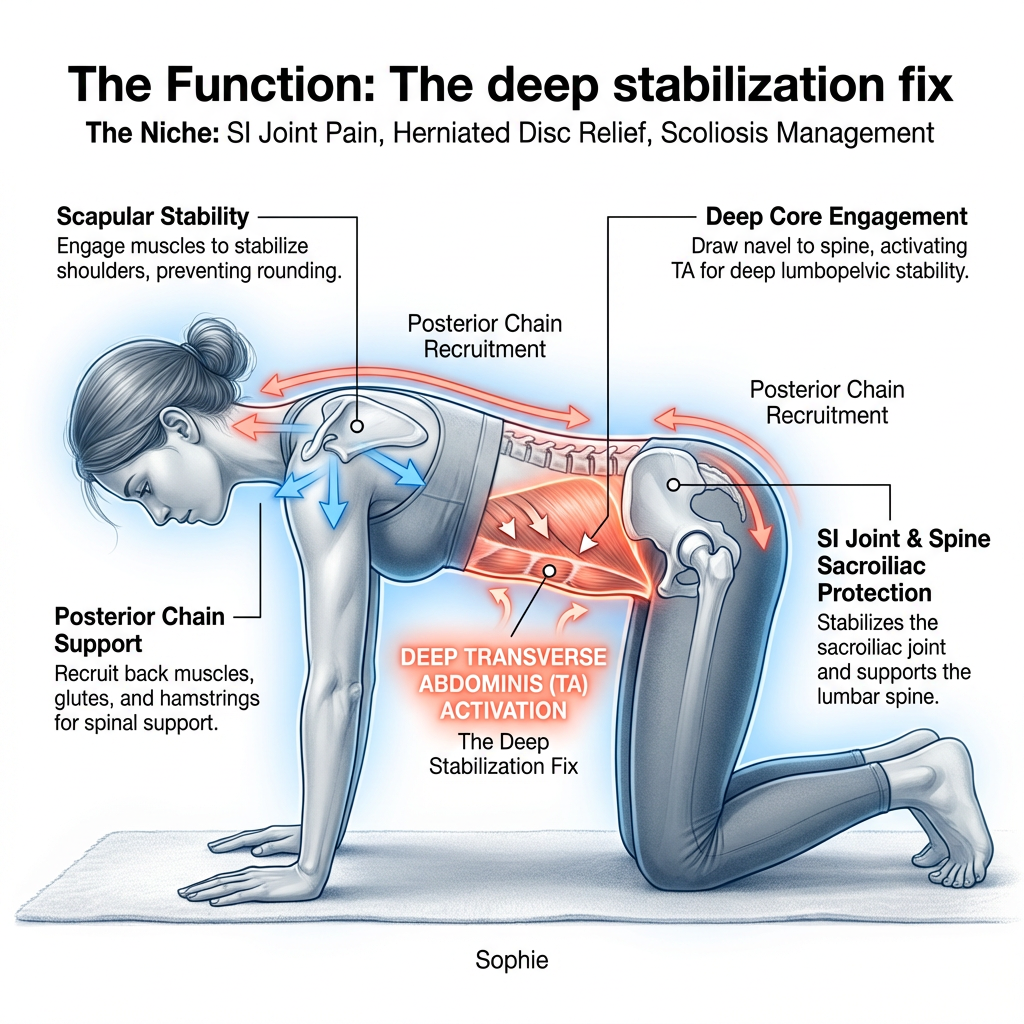
Functional close-up: Neutral Lumbar Quadruped TA Engagement
Sophie's Deep Stabilisation Reset — Neutral Lumbar Quadruped TA Engagement
Standard Stretching Generic passive stretching bypasses deep stabilisation entirely — temporary relief, no lasting change.
Sophie's Deep Stabilisation Reset Neutral Lumbar Quadruped TA Engagement — precise, controlled activation that builds the functional stability your body needs.
02

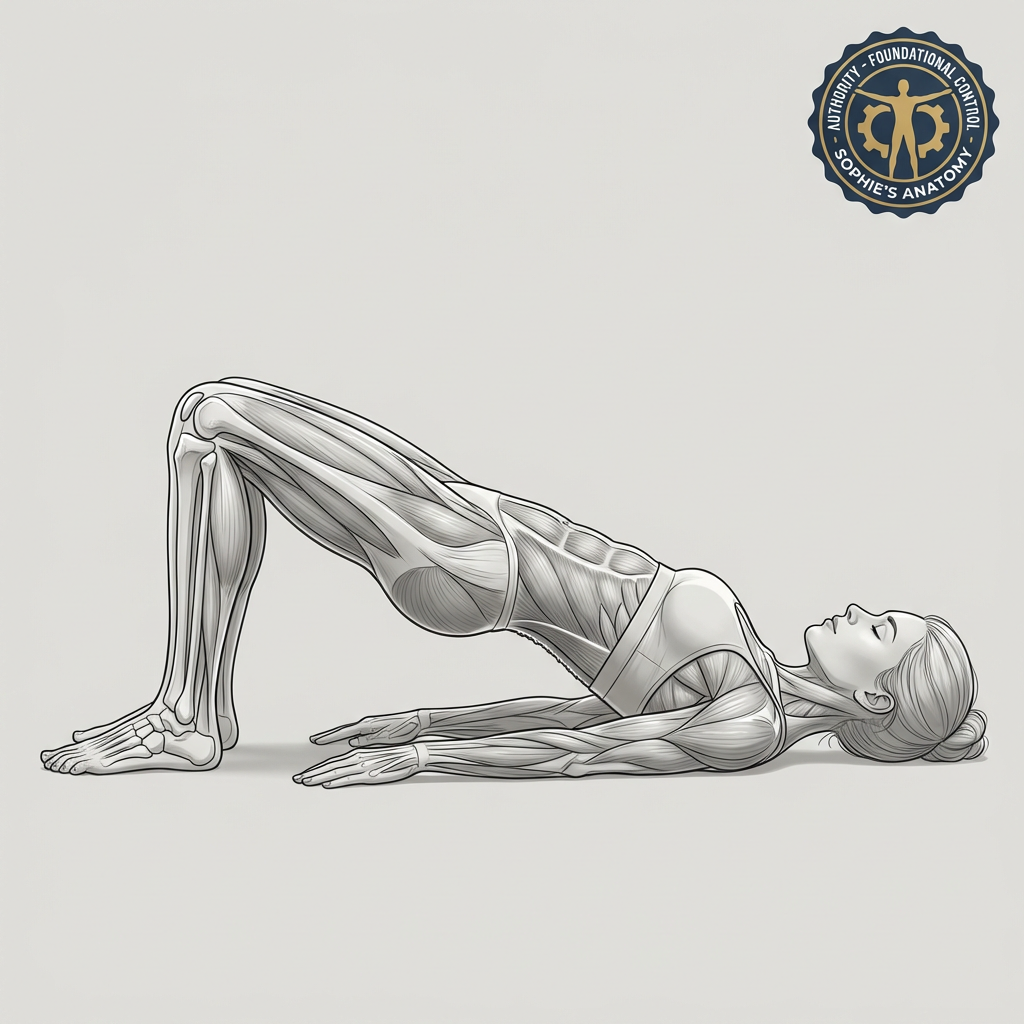
Supine Stable Pelvic Bridge

Functional close-up: Supine Stable Pelvic Bridge
Sophie's Deep Stabilisation Reset — Supine Stable Pelvic Bridge
Standard Stretching Generic passive stretching bypasses deep stabilisation entirely — temporary relief, no lasting change.
Sophie's Deep Stabilisation Reset Supine Stable Pelvic Bridge — precise, controlled activation that builds the functional stability your body needs.
03

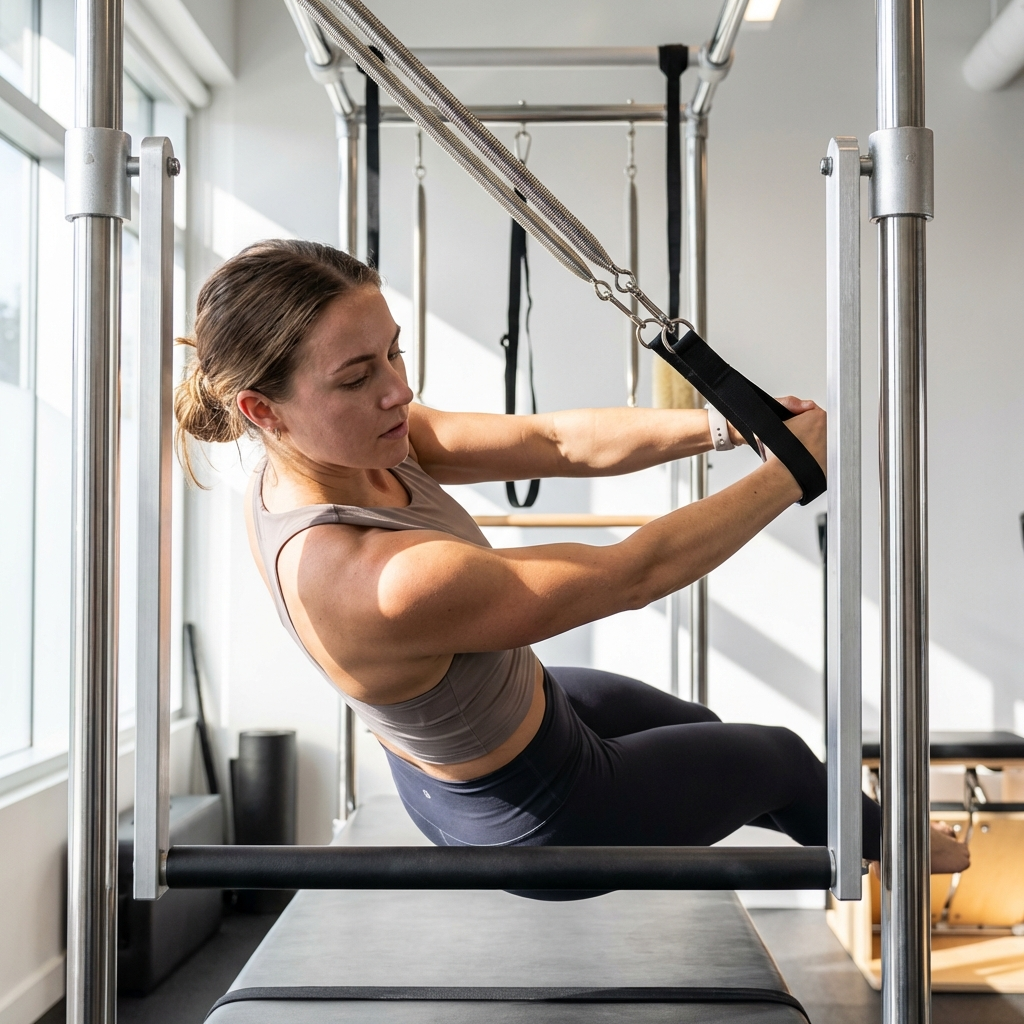
Supported posterior chain extension

Functional close-up: Supported posterior chain extension
Sophie's Deep Stabilisation Reset — Supported posterior chain extension
Standard Stretching Generic passive stretching bypasses deep stabilisation entirely — temporary relief, no lasting change.
Sophie's Deep Stabilisation Reset Supported posterior chain extension — precise, controlled activation that builds the functional stability your body needs.
04

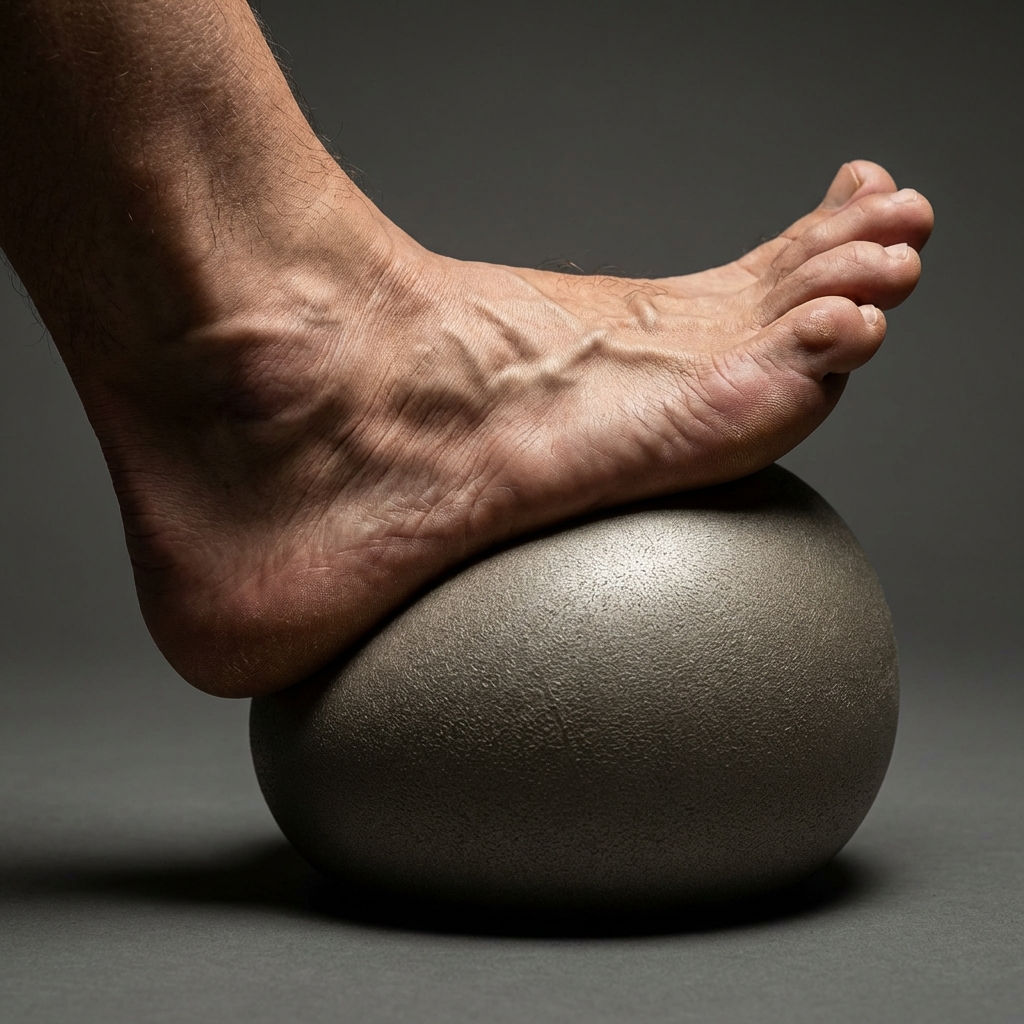
Foot Roll Articulation

Functional close-up: Foot Roll Articulation
Sophie's Deep Stabilisation Reset — Foot Roll Articulation
Standard Stretching Generic passive stretching bypasses deep stabilisation entirely — temporary relief, no lasting change.
Sophie's Deep Stabilisation Reset Foot Roll Articulation — precise, controlled activation that builds the functional stability your body needs.
🧬

Clinical Evidence: Pilates reduces lower back pain by up to 72% (Asik et al, 2025 RCT). NICE recommends Pilates as a first-line treatment for chronic lower back pain before medication.

If herniated disc overlaps with other back issues

Many people with herniated disc have related compensation patterns elsewhere in the spine. These comparisons walk through how Sophie's clinical Pilates protocols differ from generic stretching for each condition.

Browse the full library of evidence-based Pilates protocols for 35 conditions across back pain, sport-specific training, and post-surgical recovery.

A herniated lumbar disc is one of the most feared diagnoses in lower back pain, but it is also one of the most predictable to manage. The vast majority of herniated discs (some studies put it above 80%) resolve symptomatically with non-surgical care over 6–12 weeks. The crucial decision is not whether to exercise — it is which exercises to do, and which to avoid. Standard stretching gets this exactly wrong: most recommended stretches load the disc in the direction that worsens herniation. A clinical Pilates protocol does the opposite.

Why stretching is high-risk for herniated discs

The intervertebral disc is a sealed unit of cartilage with a tough outer ring (the annulus fibrosus) and a gel-like centre (the nucleus pulposus). A herniation occurs when the nucleus pushes through a tear in the annulus, sometimes contacting nerve roots. The key biomechanical principle is direction: spinal flexion (forward bending) pushes the nucleus posteriorly toward the back of the disc, where most herniations occur. Spinal extension (backward bending) pushes it anteriorly, away from the herniation.

Every common stretch for back pain — knee-to-chest, seated forward fold, child's pose, supine spinal twist with the knees pulled across — loads the spine into flexion. For someone with a posterior disc herniation, these are precisely the movements that worsen the injury. They feel temporarily good because the lumbar muscles release, but the nuclear material is being pushed further into the damaged area of the annulus. Symptoms predictably worsen, often dramatically, the following day.

Stretching also fails to address the actual recovery requirement: rebuilding the muscular support system around the spine so the damaged disc can heal without ongoing mechanical aggravation. Static stretching teaches the body nothing about how to brace, stabilise, or move safely with a vulnerable disc.

What clinical Pilates does for disc recovery

A herniated-disc Pilates protocol is built around a single biomechanical principle: maintain neutral lumbar spine, avoid flexion, build the support system. Every movement in weeks 1–6 is selected because it loads the spine in neutral or gentle extension — never in flexion. The deep stabilising muscles (transversus abdominis, multifidus) are rebuilt systematically so the spine has muscular support rather than relying on the damaged disc to bear load. The hip mobility above and below the lumbar spine is restored so daily movement no longer demands flexion at the injured level.

Phase progression matters more here than in any other condition. Weeks 1–3 are deliberately very gentle: supine and quadruped work, no rolling or curling, no flexion-based abdominal work. Weeks 3–6 introduce graded loading in neutral spine — bridges, bird dogs, side planks. Weeks 6–12 reintroduce controlled spinal movement, including gentle flexion, only once the support system is reliable enough to protect the disc.

The result, supported by both randomised controlled trials and clinical practice, is that most disc-herniation clients return to pain-free function in 8–12 weeks with the underlying disc healing in the background. Surgery rates in this population, when guided exercise is followed, are very low — typically under 10%.

How a session is built

Sessions are 20–25 minutes (deliberately shorter early on), three to four times per week. Quality of movement matters far more than duration.

01
Neutral spine setup (4 min)
Supine with knees bent, finding and holding neutral lumbar lordosis. Diaphragmatic breathing. The foundation for everything that follows.
02
Deep core in neutral (6 min)
Transversus abdominis activation while maintaining neutral spine. Pelvic floor coordination. Zero flexion, zero abdominal curling.
03
Quadruped stability (5 min)
Hands and knees, neutral spine, gentle weight shifts progressing to bird-dog by week 3. This is where motor control over the lumbar spine is rebuilt.
04
Hip work in neutral (6 min)
Bridges with TA pre-engagement, supported hip flexor opening (no aggressive stretching), gentle clamshells. Restores hip mobility without provoking the disc.
05
Gentle decompression close (3 min)
Supported supine traction-style positions, prone press-ups from week 3 (often the most pain-relieving movement for posterior herniations). A brief breathing reset.

Side-by-side: stretching vs Sophie's Pilates protocol

Standard stretching
Sophie's clinical Pilates
Direction of loading
Most stretches flex the spine — push nucleus into the herniation.
Neutral or extension biased throughout weeks 1–6.
Effect on nerve compression
Often increases nerve compression in the short term.
Decompression positions specifically reduce nerve root pressure.
Builds support system
No effect on stabiliser firing.
Rebuilds transversus abdominis and multifidus — the spine's muscular brace.
Return to function
Stretching cycle continues; flare-ups recur.
Most clients pain-free at 8–12 weeks with a sustainable movement strategy.
Surgical risk
Continued provocation can prolong inflammatory phase.
Aligned with the conservative-care pathway that resolves most disc herniations non-surgically.

Is this protocol right for you?

Good fit if
  • Adults with confirmed or suspected lumbar disc herniation
  • People in the subacute or chronic phase (typically 2+ weeks post-onset)
  • Post-physio clients ready for a structured at-home progression
  • People avoiding surgery and pursuing conservative management
  • Anyone whose stretching has worsened their symptoms
Hold off / see a clinician if
  • Acute first week after onset — let the inflammatory phase settle
  • Cauda equina symptoms (saddle anaesthesia, loss of bowel/bladder control, progressive leg weakness) — surgical emergency
  • Recent disc surgery without clearance from your surgeon
  • Severe radiculopathy with progressive neurological deficit — needs medical evaluation first
Recommended protocol

Sophie's Complete Herniated Disc Protocol

12-week progressive programme · 48 clinical exercises · Weekly schedules · Recovery tracker

What's inside

  • All 48 exercises photo-demonstrated, with detailed cues
  • Phased progression: decompression → stabilisation → integration
  • Weekly milestones and printable workout logs
  • Contraindication list specific to this condition
  • Built for home practice on a mat — no studio required
“After my L5/S1 herniation my physio said no flexion. I had no idea what to actually do at home until this protocol. Twelve weeks in, I'm back to no...” — Daniel K., Bristol, UK · Returned to running (After 12 weeks)
$67 $37 Save $30
Get the full Herniated Disc protocol →
2,347+ Downloads
96% Satisfaction
4.9 Across 200+ reviews

7-day money-back guarantee · Instant PDF download

Frequently asked questions

I have a confirmed L4/L5 herniation. Is this safe?
For a stable, non-progressive herniation that has been investigated and where conservative management has been recommended, this protocol is built around the exact biomechanical principles that protect the disc — neutral spine, no flexion loading, gradual progression. If you have any uncertainty about the stability of your herniation, share the protocol design with your physiotherapist or spine specialist before starting. The first three weeks are gentle enough that most clients with confirmed herniations tolerate them very well.
How long until I can return to my normal activities?
Most clients with non-acute disc herniations are pain-free during daily activities within 4–6 weeks. Return to higher-load activities (lifting, running, sport) is typically possible in weeks 8–12, depending on starting severity and adherence. The protocol explicitly addresses the return-to-load progression so you know what to add when.
Is the McKenzie press-up included? My physio mentioned it.
Yes — supported prone press-ups are introduced in week 3 (assuming centralisation, the McKenzie criterion, is positive). For posterior disc herniations, they are often the single most effective movement because they push the nuclear material anteriorly, away from the herniation. The protocol provides clear progression and contraindication rules so you know when they're helping and when to stop.
What about sitting? Sitting kills me.
Prolonged sitting loads the lumbar disc significantly — even more than standing. The protocol includes a sitting strategy with three components: a lumbar support setup that maintains neutral spine, a 90-minute timer for standing breaks, and a 60-second standing reset routine that can be done in any clothing. Most clients see sitting tolerance double within the first three weeks.
Should I keep going to physio while I do this?
Yes — ongoing physiotherapy and this protocol are complementary, not competing. The protocol is a structured at-home progression; your physio provides hands-on assessment, manual therapy if needed, and clinical oversight. Many physiotherapists are happy to review the protocol with you to ensure it complements your clinical plan.
When can I lift things again?
Light functional lifting (under 5kg, hip-hinge pattern, neutral spine) is introduced in week 4 of the protocol. Heavier lifting (groceries, children, gym lifts under 20kg) typically returns in weeks 6–8. Loaded barbell work and maximal lifting waits until week 10–12 and depends on individual response.
Will the protocol shrink my herniation?
Imaging studies show that many disc herniations spontaneously shrink (resorb) over 6–12 months — sometimes substantially. Exercise doesn't directly shrink the herniation, but it removes the ongoing mechanical aggravation that prevents healing, restores the muscular brace that protects the disc, and reduces inflammation through movement. Most clients report symptom resolution well before any imaging follow-up shows structural change.
Pilates vs Stretching for Herniated Disc Recovery Protocol — $37 Get the Herniated Disc Recovery program →